


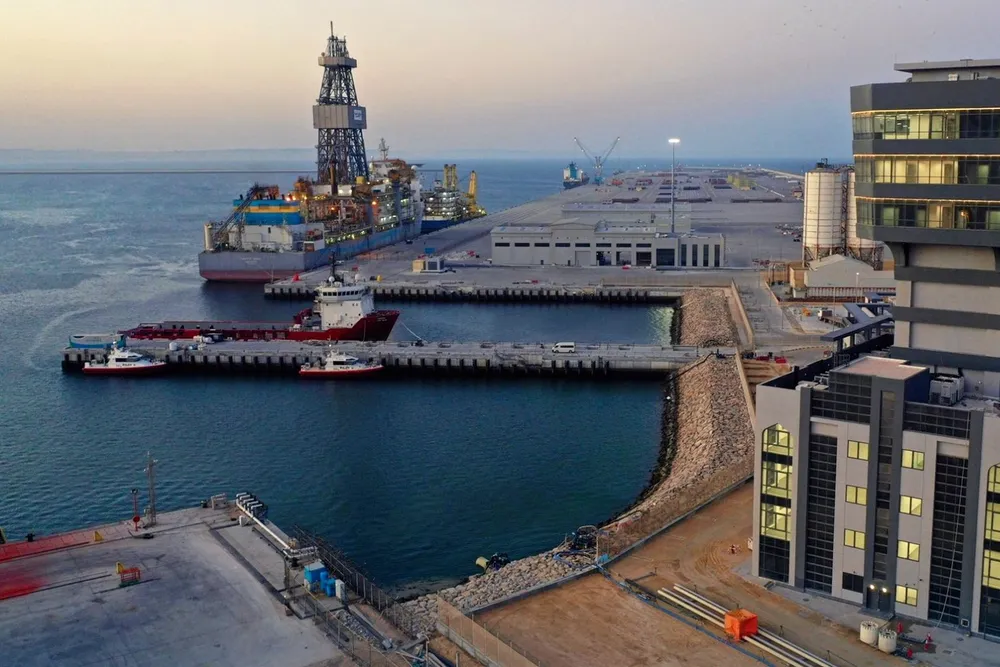
Closely monitoring international reports, Hydrogen Oman (Hydrom) is considering BP’s decision to withdraw from several green hydrogen projects worldwide, like in Australia, the UK and the Sultanate of Oman. The cancellation was announced in media sources as indicating ‘global portfolio realignment’ by BP.
The Duqm Project
The Duqm project had originally aimed for a large‑scale green hydrogen facility (reportedly ~1.5 GW capacity) and expected to produce around 150,000 metric tonnes of green hydrogen annually. Hydrom cited the exit as a mutually agreed decision and emphasized that BP remains involved in Oman’s hydrogen ecosystem, especially via another project called Hyport Duqm.
This Hyport Duqm project is envisioned as a ‘first operational, large-scale green hydrogen project’ in Oman, located inside the Special Economic Zone at Duqum (SEZAD). It has already entered Phase 1, targeting initial annual outputs of 100,000 tonnes of green ammonia and 17,000 tonnes of green hydrogen, with scope for scaling up to much higher volumes in later phases.
The cancellation of Duqm does not undermine Oman’s ‘Green Hydrgen Strategy’. The remaining awarded projects, including other developers’ ventures, not just that of BP’s, are being carried forward under existing frameworks. One such project is the ACME Duqm Project, which has reportedly commenced Phase 1, aiming at green ammonia and hydrogen output in the near to medium term. In terms of global energy transition, the cancellations illustrates that green hydrogen projects are being re-evaluated as companies confront rising costs, uncertain demand, and absence of robust off take agreements.
About BP
BP plc (formerly British Petroleum), is one of the world’s largest integrated energy companies. It has been expanding into renewables and hydrogen, including partnerships in Oman to explore large-scale green hydrogen and ammonia production. The company has faced growing investor pressure to balance low-carbon investments with profitability, prompting a more selective approach to green hydrogen megaprojects like Duqm. In Oman, BP’s broader presence includes gas development and long-term exploration agreements, giving it a strategic foothold in the country’s energy sector even as it fine-tunes its hydrogen ambitions. This repositioning reflects BP’s shift toward disciplined capital allocation rather than a retreat from low-carbon energy altogether.
The BP has exited Australian Renewable Energy Hub (AREH) project and cancelled H2Teesside / Teesside hydrogen project of UK, and the POSCO linked HyDuqm project, developed in collaboration with ENGIE.
