


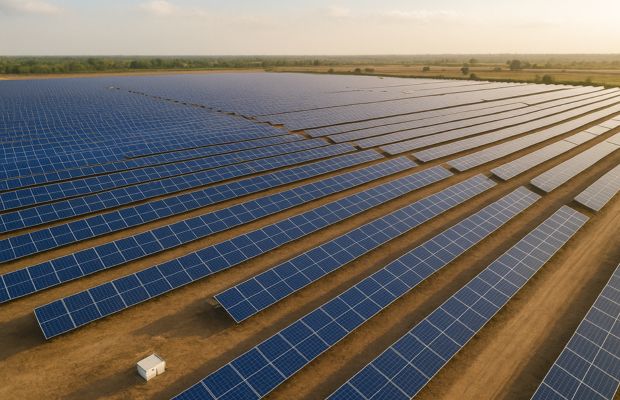
ENGIE, a global low-carbon energy solutions provider, and an Abu Dhabi Future Energy Company PJSC – Masdar have reached financial close for the 1.5 gigawatt (GW) (AC) Khazna Solar Photovoltaic (PV) Independent Power Project located between Abu Dhabi and Al Ain.
This marks a decisive step in the development of one of the region’s largest solar projects and ENGIE’s largest photovoltaic plant worldwide. The project, which was awarded in October 2025, is being developed under a 30‑year Power Purchase Agreement (PPA) signed with Emirates Water and Electricity Company (EWEC).
Financing Secured by Leading International Partners
The financing for the latest project was arranged with seven major regional and international banks, including Abu Dhabi Islamic Bank, Crédit Agricole Corporate and Investment Bank, KfW IPEX, BNP Paribas, Hongkong and Shanghai Banking Corporation, Sumitomo Mitsui Trust Bank, and Emirates Development Bank.
Scheduled to enter commercial operation in 2028, Khazna Solar PV will generate enough electricity to power around 160,000 Emirati households and avoid the emission of 2.4 million tonnes of CO₂ per year, thereby contributing to the UAE’s “Net Zero by 2050” strategic initiative and Abu Dhabi’s objective to meet 60% of electricity demand from renewable sources by 2035.
Khazna Solar PV represents the first implementation of a regional cooperation agreement between ENGIE, LONGi (solar panel supplier), and PowerChina (EPC – engineering, procurement and construction). The collaboration aims to pool expertise and resources to develop large‑scale solar projects (over 800 MW) in Saudi Arabia, the UAE, and Morocco, thereby strengthening the partners’ expansion across the Middle East and North Africa.
Catherine MacGregor, Chief Executive Officer of ENGIE, said: “The financial close of Khazna Solar PV marks a key milestone and confirms ENGIE’s role as a trusted partner in accelerating the energy transition in the Middle East, through large‑scale projects that enhance energy security and contribute to decarbonization goals.”
